
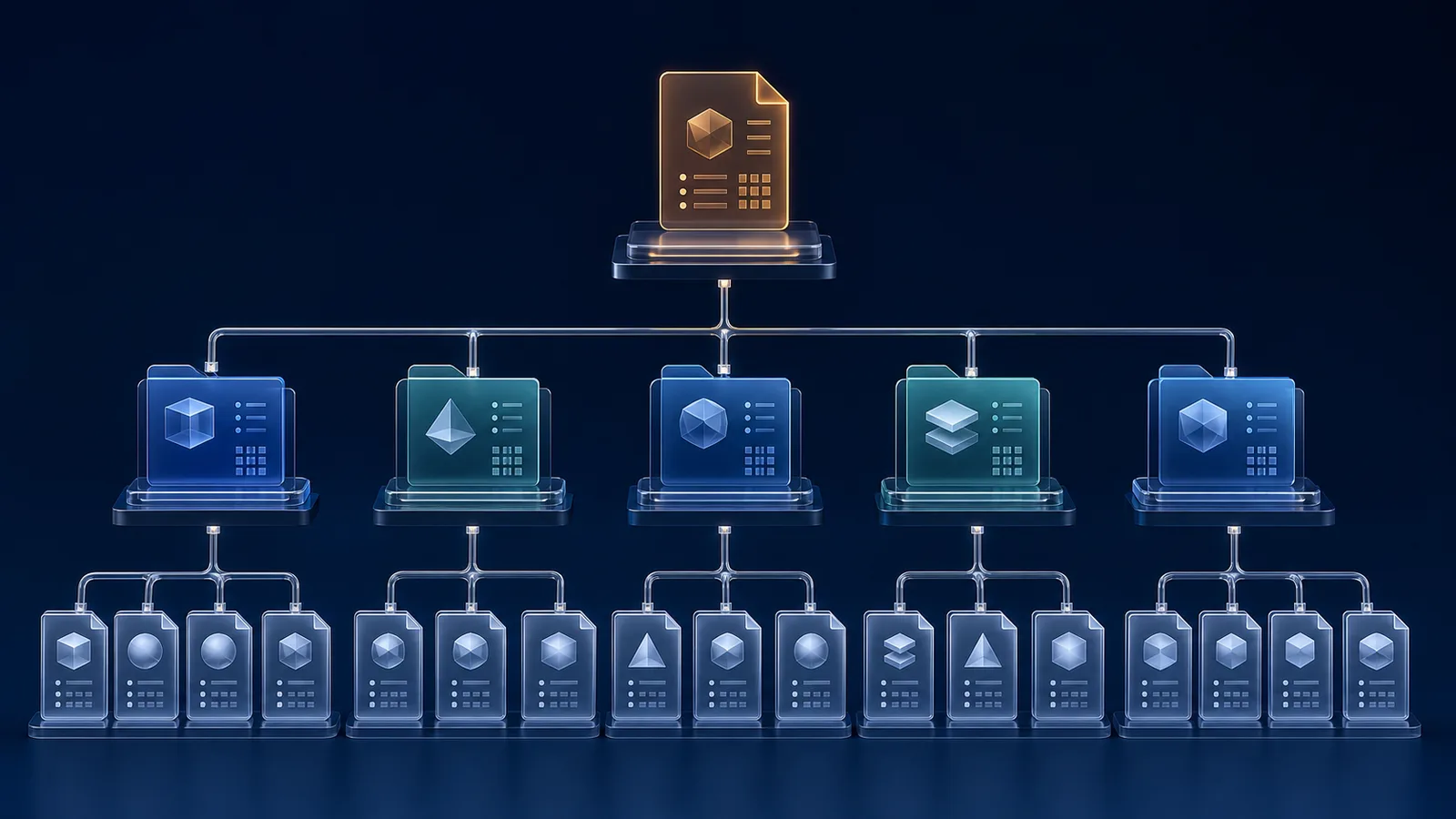
A chart of accounts for digital assets is an organized list of the ledger accounts a business uses to classify resources, obligations, capital, income, and costs. A good chart is detailed enough to explain balances and activity, but stable enough that reports remain comparable from one period to the next. It should reflect the entity's real operations and approved accounting policies, not simply copy the names used by a trading platform or transaction source.
Purpose and design principles
The chart of accounts is the index of the general ledger. Every balanced transaction points to accounts in that index, and every account feeds reports. If the chart changes constantly or uses overlapping labels, similar events may be recorded differently. If it is too broad, decision-makers may be unable to distinguish important sources, uses, or risks.
Begin by listing the recurring events the entity actually has: funding, acquisitions and disposals, transfers between resources controlled by the entity, supplier payments, customer receipts, service costs, financing, and period-end adjustments. Then list the reports and questions the ledger must support. That exercise reveals which distinctions deserve separate accounts.
Apply three tests before adding an account. Is the distinction required by an approved accounting or reporting policy? Will it be reviewed regularly? Is the information more useful in the ledger than in a transaction reference or subsidiary record? If the answer to all three is no, another account may create noise rather than insight.
Account families and useful levels of detail
A common high-level structure groups accounts into assets, liabilities, equity or capital, income, and expenses. Within those families, a digital asset business may need accounts that distinguish cash resources, digital asset holdings, receivables, payables, owner funding, operating income, professional services, processing costs, or other activity relevant to its business model.
Those labels are only a starting point. A token or contractual right should not be placed in an account merely because its everyday name sounds like an asset, liability, income item, or cost. Rights, obligations, purpose, control, transaction terms, and applicable rules can affect classification. Material judgments need evidence and professional approval.
Avoid creating one general-ledger account for every address, counterparty, network, or individual unit unless a real reporting need justifies it. That level of detail can often be retained in descriptions, references, schedules, or supporting evidence. Conversely, one account called “Crypto” may be too broad if different holdings require different treatment or monitoring. Aim for the smallest set of accounts that still supports consistent decisions.
Numbering and naming conventions
Account numbers make ordering and expansion predictable. A simple illustrative pattern could reserve 1000–1999 for assets, 2000–2999 for liabilities, 3000–3999 for capital, 4000–4999 for income, and 5000–5999 for costs. Leave gaps between accounts so new accounts can be inserted without renumbering the ledger.
| Illustrative code | Illustrative account | Purpose |
|---|---|---|
| 1010 | Cash resources | Track cash balances used by the entity |
| 1110 | Digital asset holdings — Group A | Track a policy-defined class of holdings |
| 2010 | Supplier payables | Track unpaid supplier obligations |
| 3010 | Owner funding | Track qualifying owner contributions |
| 4010 | Service income | Track qualifying operating receipts |
| 5010 | Processing costs | Track costs under the approved policy |
Use names that are unique, plain, and durable. Add a short account description stating what belongs there, what does not, who owns the account, and which evidence is expected. “Digital asset holdings — Group A” is more maintainable than a label that mixes a provider, purpose, and temporary project. The actual family and terminology should match the entity's approved framework and local requirements.
Worked example: from event to accounts
Assume a small software business uses 6,000 reporting units of cash to acquire a digital asset for an approved operational purpose. A separately invoiced advisory service of 300 is payable next month. Under the business's illustrative policy, the acquisition and service are recorded as two events:
- Debit “Digital asset holdings — Group A” for 6,000 and credit “Cash resources” for 6,000.
- Debit “Professional services” for 300 and credit “Supplier payables” for 300.
Each event is balanced, but the example's main lesson is structural. The chart separates the resource acquired, the resource paid, the service cost, and the unsettled obligation. Reports can therefore show each balance without reading every transaction description. If professional analysis determines that either item needs a different recognition or presentation, the account design and entries should be updated through a documented process.
After posting, the business can review account activity and follow the steps in the trial balance guide. It should also reconcile source evidence to the ledger so a perfectly organized chart does not conceal missing transactions.
Governance, limitations, and professional review
Assign one owner to approve new accounts and maintain an account dictionary. Before adding an account, check whether an existing account already serves the purpose. Do not delete or repurpose an account with historical activity merely to tidy the list; preserve comparability and document approved changes. Review inactive, duplicate, and rarely used accounts at a scheduled interval.
The AmarDeFi Accounting workspace supports accounts, balanced debit and credit transactions, and reports including a trial balance. It can provide structure, but it does not determine the correct recognition, measurement, tax position, disclosure, or jurisdictional treatment. A chart of accounts is an organizational tool, not evidence that the books comply with any particular framework.
Digital asset arrangements can differ materially even when they use similar terminology. Ask a locally qualified accounting, tax, or legal professional—as appropriate—to approve account classifications, reporting policies, valuation methods, and regulatory obligations. Revisit the chart when the business model changes, but avoid unnecessary changes that break period-to-period analysis.
Frequently asked questions
Should every digital asset have its own ledger account?
Not automatically. Separate accounts when policy, materiality, risk, or reporting needs justify the distinction. Otherwise, supporting references or schedules may hold the detail more efficiently.
Can account numbers be changed later?
They can, but frequent renumbering can disrupt comparisons and procedures. Plan ranges with gaps, document approved changes, and preserve a mapping from old identifiers where historical reports depend on them.
Is there one standard chart of accounts for all digital asset businesses?
No. The useful structure depends on the entity, contracts, activities, policies, and local obligations. Templates are starting points, not authoritative classifications.
How often should the chart be reviewed?
Review it at least as part of the reporting-cycle control process and whenever the entity adds a material activity. The goal is controlled change, not constant expansion.
Editorial note: This article is general educational information, not personalized financial, accounting, tax, or legal advice. Product capabilities and obligations can change; verify current facts and consult a qualified professional where needed.